Amenity Healthcare · Understanding anxiety
Understanding agoraphobia.
Find your next step.
When everyday places feel overwhelming, asking for support can be a meaningful first step. Talk with us about your concerns, the situations you avoid, and what you would like to feel more comfortable doing.
Recognize the patterns
What are common agoraphobia symptoms?
Agoraphobia can affect thoughts, physical sensations, and daily routines. The situations that feel difficult and the level of distress vary from person to person.
Fear and worry
- Worrying that escape or help will be difficult
- Feeling anxious before entering certain places
- Fearing panic-like symptoms when away from a familiar setting
Physical symptoms
- A racing heart, sweating, or trembling
- Feeling dizzy, faint, or nauseated
- Rapid breathing during anxiety-provoking situations
Avoidance and routines
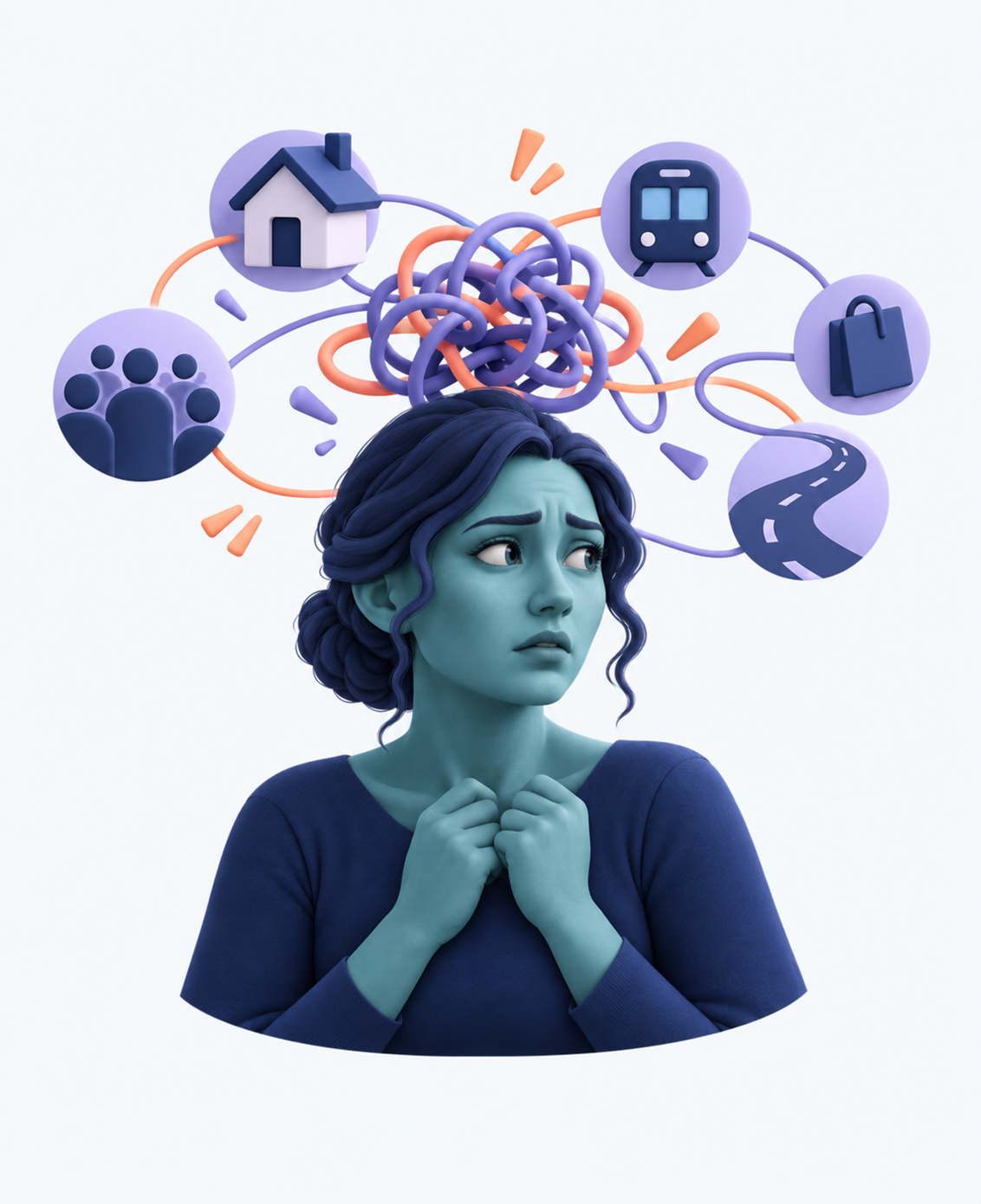
- Avoiding crowds, lines, public transportation, or shops
- Needing a trusted companion to go out
- Limiting outings or changing plans because of fear
Symptoms alone do not confirm agoraphobia. An assessment considers how fear and avoidance affect your life and whether another condition could explain your experiences.
A clearer picture
How is agoraphobia diagnosed?
A clinical assessment looks at your symptoms, health history, and daily experiences. Your provider will explore the situations you fear or avoid and how long these patterns have been present.
Let’s start with Your story.
Share when anxiety occurs, what you worry might happen, and how it affects work, relationships, errands, or leaving home.
Review the entire picture
Your provider may ask about panic attacks, other anxiety symptoms, medications, and physical health. Further medical evaluation may help identify other causes of symptoms.
Discuss a care plan
Review the findings together and discuss suitable treatment options, goals, and referrals when needed.
Your next step
You don’t have to figure it out alone.
Book an appointment with Amenity Healthcare to discuss your concerns and next steps. If attending an appointment feels difficult, contact us to ask about available options.
Agoraphobia FAQs
A little more clarity
Explore common questions about agoraphobia, assessment, and treatment.
Is agoraphobia just a fear of open spaces?
No. The central concern is often difficulty escaping or getting help if distressing symptoms occur. Enclosed places, crowds, transportation, and being outside alone can also feel difficult.
Can I have agoraphobia without panic attacks?
Yes. Agoraphobia can occur with or without a history of panic attacks. A provider can assess both agoraphobia and panic-related symptoms.
Does agoraphobia always mean being unable to leave home?
No. Some people avoid particular situations but still go out. Others need a companion or find leaving home very difficult. The impact can vary.
How is agoraphobia assessed?
Your provider will ask about feared situations, avoidance, symptom history, and daily functioning. A questionnaire may support the conversation, but an online quiz cannot establish a diagnosis.
What treatment options can help?
Cognitive behavioral therapy (CBT), often including gradual exposure, can help address fear and avoidance. Medication may also be considered. Your provider can discuss benefits, risks, and options appropriate to your needs.
What does exposure therapy involve?
Exposure therapy involves practicing feared situations gradually with a therapist’s guidance. You work together on manageable goals and build skills over time, rather than starting with the most frightening situation.
What if anxiety makes attending an appointment difficult?
Call Amenity Healthcare at (813) 773-1932 to discuss the barrier and ask what appointment options are available. You can prepare notes about your symptoms and goals before speaking with a provider.
How can I support someone with agoraphobia?
Listen without judgment, ask what support would be useful, and encourage professional care. A therapist can help you understand how to support the person’s treatment goals without pressuring them.
Sources & further reading
- National Health Service (NHS). Overview - Agoraphobia. Accessed October 11, 2026.
https://www.nhs.uk/mental-health/conditions/agoraphobia/overview/ - National Health Service (NHS). Symptoms - Agoraphobia. Accessed October 11, 2026.
https://www.nhs.uk/mental-health/conditions/agoraphobia/symptoms/ - National Health Service (NHS). Diagnosis - Agoraphobia. Accessed October 11, 2026.
https://www.nhs.uk/mental-health/conditions/agoraphobia/diagnosis/ - National Health Service (NHS). Treatment - Agoraphobia. Accessed October 11, 2026.
https://www.nhs.uk/mental-health/conditions/agoraphobia/treatment/
Educational information; an individual assessment is needed for diagnosis and treatment recommendations.