Amenity Healthcare · Sleep concerns
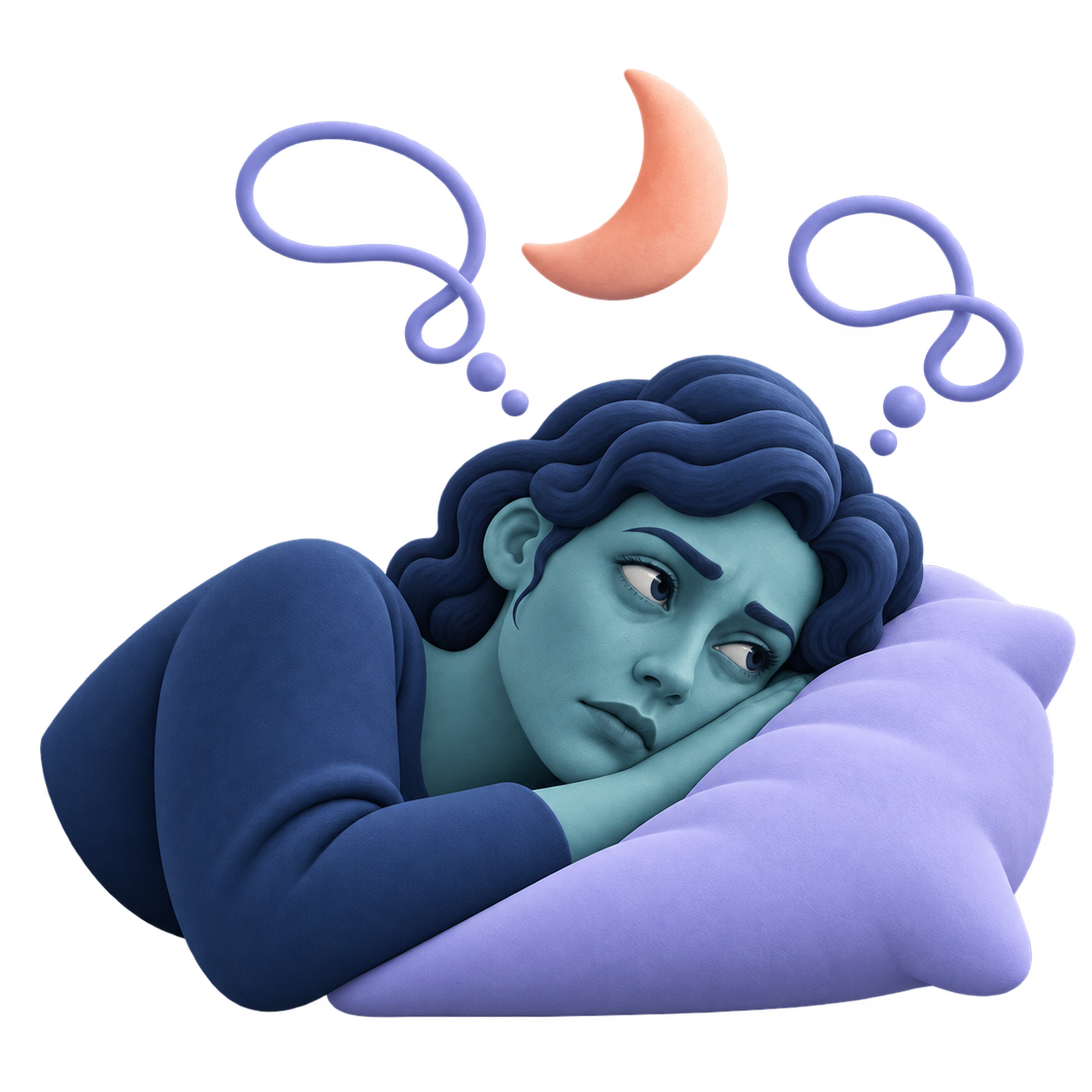
Understanding insomnia.
Find your next step.
Long nights can make everyday life feel harder. Start with a conversation about your sleep, how you feel during the day, and what might help.
Recognize the patterns
What are common insomnia symptoms?
Sleep difficulties can show up at night and carry into the next day.
Falling asleep
- Lying awake for a long time
- Finding it difficult to settle into sleep
Staying asleep
- Waking repeatedly during the night
- Waking too early and struggling to return to sleep
During the day
- Feeling unrested or sleepy
- Difficulty concentrating or feeling more irritable
You do not need to wait months to ask for help. If poor sleep is affecting your day, bring it up with your healthcare provider.
A clearer picture
How is insomnia assessed?
An assessment starts with your sleep patterns and health history. Testing or a referral may be recommended when another condition could be affecting your sleep.
Let’s start with your story.
Discuss your nights, your daytime energy, and how long sleep has been difficult.
Review the whole picture
Review your schedule, medications, health concerns, and sleep habits. A sleep diary can help identify patterns.
Create a plan together
Discuss appropriate treatment options and whether further evaluation or specialist care would help.
Support that fits your needs
What can help with insomnia?
Treatment depends on your sleep concerns and overall health. These are options to discuss with your provider.
CBT-I
Cognitive behavioral therapy for insomnia is a recommended first treatment for chronic insomnia. It addresses thoughts and habits that keep sleep difficulties going.
Sleep routines
A consistent sleep schedule, a quiet bedroom, and limiting caffeine and alcohol near bedtime can support sleep. Habits alone may not be enough for chronic insomnia.
Individualized care
Medication may be considered after reviewing benefits, risks, and your health history. Your provider can also discuss referral options when needed.
Your next step
Let’s talk about your sleep.
Contact Amenity Healthcare to request an appointment. Share your concerns and ask about assessment, treatment options, and further testing if appropriate.
Insomnia FAQs
A little more clarity
Explore common questions about insomnia, sleep assessment, and treatment.
What is the difference between short-term and chronic insomnia?
Short-term insomnia may last days or weeks, sometimes after stress or a schedule change. Chronic insomnia involves sleep difficulty at least three nights a week for three months or longer. Frequency alone does not establish a diagnosis; your provider also considers its effect on daily life and your opportunity to sleep. [1] [3]
Do I need a sleep study?
Your provider will decide whether testing would be useful. A sleep study can help investigate other sleep disorders, such as sleep apnea. Mention loud snoring or waking up gasping during your assessment. [3]
Is CBT-I the same as advice about better sleep habits?
No. CBT-I combines several approaches to change sleep-related thoughts and behaviors. The American Academy of Sleep Medicine recommends this treatment for chronic insomnia and advises against using sleep hygiene alone as the sole treatment. Ask your provider how to access CBT-I. [5]
Will I need sleeping medication?
Not necessarily. CBT-I is usually the first option for long-term insomnia. If medication is considered, discuss possible side effects, interactions, and how long it should be used. [4]
Should I try melatonin or an over-the-counter sleep aid?
Check with your provider before starting a sleep aid or supplement. Melatonin has not been established as an effective treatment for insomnia, and over-the-counter products can have side effects or be unsuitable for some people. [4]
What should I bring to my appointment?
Bring a medication and supplement list. If possible, keep a sleep diary for one to two weeks: note bedtimes, wake times, naps, and how you feel during the day. [3]
How do I get started?
Call (813) 773-1932 to request an appointment with Amenity Healthcare and discuss your sleep concerns.
Sources & further reading
- NIH, National Heart, Lung, and Blood Institute: What Is Insomnia?
- NIH, National Heart, Lung, and Blood Institute: Insomnia Symptoms
- NIH, National Heart, Lung, and Blood Institute: Insomnia Diagnosis
- NIH, National Heart, Lung, and Blood Institute: Insomnia Treatment
- Edinger JD, et al. Behavioral and psychological treatments for chronic insomnia disorder in adults: an American Academy of Sleep Medicine clinical practice guideline. Journal of Clinical Sleep Medicine. 2021;17(2):255–262.
Sources accessed September 27, 2026. Educational information; diagnosis and treatment recommendations require an individual assessment.