Amenity Healthcare · OCD care
Understanding OCD.
Find your next step.
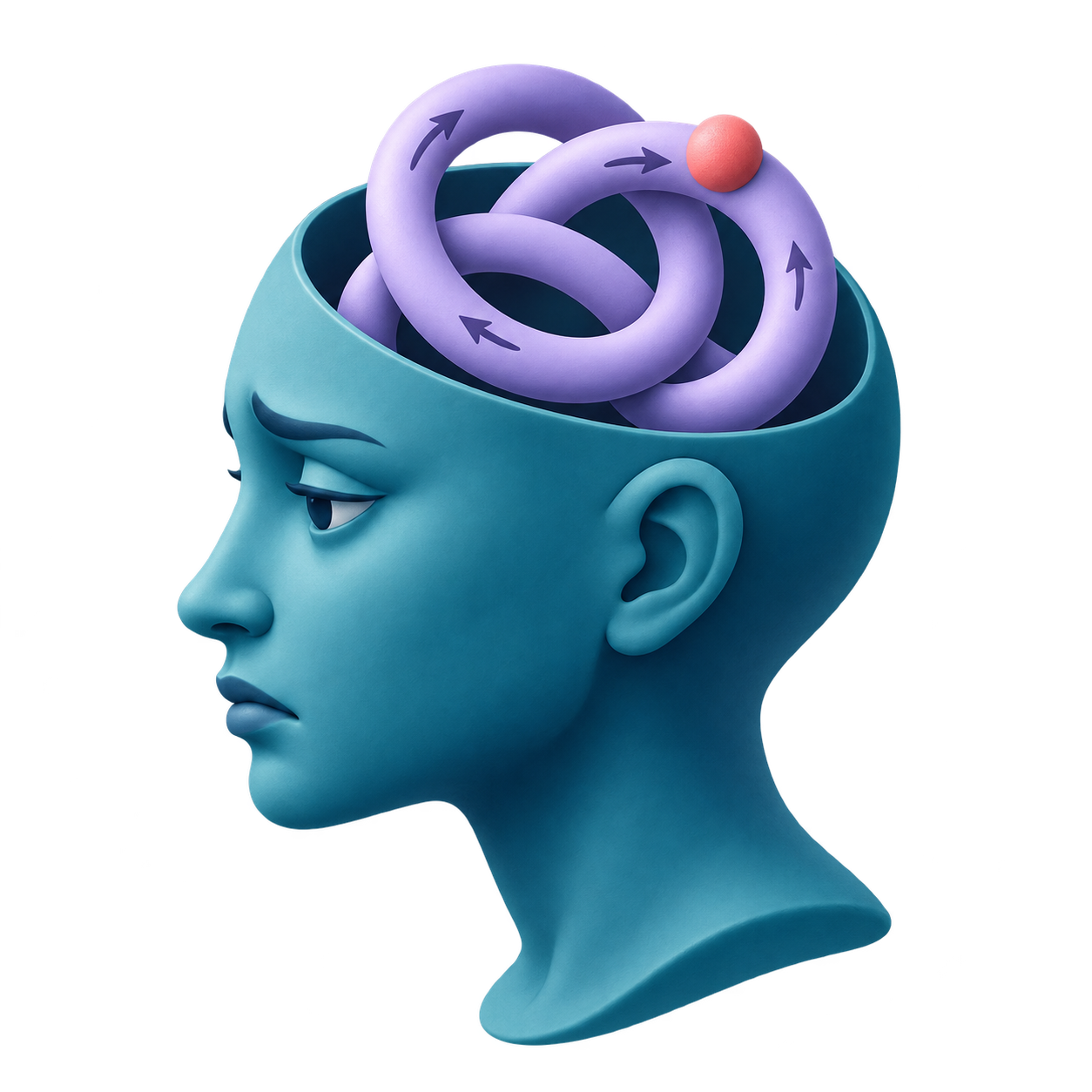
When unwanted thoughts and repeated rituals take up your time, it can be hard to know where to turn. Start with a conversation about what you’re experiencing and the support you need.
Recognize the patterns
What are common OCD symptoms?
OCD can look different from person to person. Some symptoms are visible, while others happen internally.
Unwanted thoughts
- Recurring fears about contamination or harm
- Intrusive thoughts or images that feel upsetting
- Distress when things do not feel symmetrical or “just right”
Repeated rituals
- Washing, checking, or arranging repeatedly
- Counting or repeating words silently
- Feeling driven to repeat actions to ease distress
Daily impact
- Rituals taking time away from responsibilities
- Difficulty interrupting repeated thoughts or behaviors
- Disruption to relationships, work, or routines
An occasional unwanted thought or repeated check does not establish OCD. An assessment considers the distress, time involved, and impact on your life.
A clearer picture
How is OCD assessed?
A clinical assessment explores your thoughts, behaviors, and health history. Questionnaires may help, and a provider may check for other conditions that could explain your symptoms.
Let’s start with your story.
Discuss your concerns, when symptoms began, and how they affect your day.
Review the whole picture
Talk about both visible and mental rituals, your health history, and any other symptoms.
Discuss your next steps
Review treatment options and whether referral to a clinician with specific OCD expertise would be helpful.
Your next step
You don’t have to figure it out alone.
Contact Amenity Healthcare to request an appointment. Share your concerns and ask about assessment and next steps for OCD.
OCD FAQs
A little more clarity
Explore common questions about OCD, assessment, and treatment.
Is OCD just being neat or organized?
No. Enjoying order is not the same as OCD. OCD involves unwanted obsessions or compulsions that cause distress, consume time, or interfere with daily life. [1]
Can compulsions happen only in my mind?
Yes. Compulsions may include silent counting, praying, or repeating words to try to reduce distress. These mental rituals can be difficult for others to notice. [1]
Does an unwanted thought mean I want to act on it?
An intrusive thought is not the same as an intention. OCD can involve frightening thoughts that are unwanted and distressing. A clinician familiar with OCD can help assess their meaning and distinguish obsessions from actual risk. [4]
How is OCD different from everyday worry?
OCD can involve recurring intrusive thoughts and rituals intended to ease distress. Anxiety and other conditions can have overlapping symptoms, and more than one condition may be present. A clinical assessment helps clarify the pattern. [2]
What is exposure and response prevention (ERP)?
ERP is a form of cognitive behavioral therapy used for OCD. With a trained therapist, you gradually face situations that trigger obsessions while practicing not performing the usual rituals, including mental rituals. Treatment is planned collaboratively and tailored to your needs. [4]
Can medication help with OCD?
Selective serotonin reuptake inhibitors (SSRIs) are among the medications used for OCD. A provider can discuss therapy, medication, or a combination, depending on symptom impact and your preferences. Medication requires follow-up to assess benefits and side effects. [4]
What should I bring to an OCD assessment?
It may help to write down examples of unwanted thoughts, rituals, and situations you avoid, along with how much time they take. Bring a medication list, relevant records, and questions you want to discuss. Assessment includes questions about thoughts, behaviors, and health history. [3]
How do I get started with Amenity Healthcare?
Call (813) 773-1932 to request an appointment and ask about assessment and next steps for OCD, including referral for specialized therapy when appropriate.
Sources & further reading
- National Institute of Mental Health (NIH): Obsessive-Compulsive Disorder—When Unwanted Thoughts or Repetitive Behaviors Take Over. Revised 2023.
- National Library of Medicine (NIH), MedlinePlus: Obsessive-Compulsive Disorder. Symptoms, diagnosis, and treatment.
- National Library of Medicine (NIH), MedlinePlus: Obsessive Compulsive Disorder (OCD) Test. Clinical assessment.
- National Institute for Health and Care Excellence (NICE): OCD and body dysmorphic disorder—Treatment recommendations (CG31). Recognition, CBT with ERP, and medication.
Sources accessed September 27, 2026. Educational information; an individual assessment is needed for diagnosis and treatment recommendations.